
A webinar is an online video presentation, with registration and a scheduled time, in which an expert teaches a topic and leads viewers to a next step, such as a purchase, an application or a conversation with the sales team. It can happen live or be recorded once and go live at the scheduled time.
If you already sell mentoring, consulting or a program, someone has probably told you: "run a webinar". You pick a date, invite your list, present for more than an hour, answer the questions in the chat and, at the end, show the offer. Some people buy. The following week, the result depends on you doing everything again.
That is where the question that brought you here comes in: what is a webinar, really, and why does it become the main sales channel for some businesses and just another live stream for others? The short answer is that a webinar is not an event. It is a stage of the sales process. This page explains the format from the definition up and shows what changes when you start treating it that way.
What is a webinar: meaning and origin of the word
The word webinar combines web (the internet) and seminar. The webinar meaning is exactly that: a seminar held over the internet, for people who registered to watch. In Portuguese you will also see webinário, which is the local adaptation of the same term.
In practice, a webinar has four elements that set it apart from a regular video:
- Registration: the person leaves a name and contact details to watch, so you know who they are.
- Scheduled time: the presentation starts on a set day and at a set time, which creates commitment from the registrant.
- Interaction: there is a chat, with questions and answers during the presentation.
- Call to action: at the end, viewers get a clear next step, which can be a purchase, an application or a meeting.
The fourth element is what separates an educational webinar from a webinar that sells. Content that teaches and ends with no next step is a class. Content that teaches, changes how the person understands their own problem and leads to a decision is a sales presentation.
Types of webinar: live, recorded, simulive and evergreen
You will find four formats under different names. They answer different questions: how the content was produced, how the person watches and how long the presentation keeps running.
| Type | How it works | When it makes sense |
|---|---|---|
| Live | You present in real time, on a single date | Validating a new offer, running a launch, talking to your list |
| Recorded | The presentation is made once and stays available to whoever registers | Client training, educational content, onboarding students |
| Simulive | The presentation is recorded once and goes live at the scheduled time, with chat and a call to action at the right moment | Selling every day without depending on your calendar |
| Evergreen | The presentation runs all year, with new registrants every week or every day | Scaling an offer that already sells |
Notice that recorded, simulive and evergreen overlap. Evergreen describes the calendar, because it runs with no end date. Simulive describes the viewer's experience, because the presentation goes live at the scheduled time. Recorded describes how the content was produced. If you want to understand the format that runs every day, the guide to the automated webinar shows the full structure, and the comparison of a recorded or live webinar helps you decide where to start.

What a webinar is for
A webinar can have four functions. They can work together, but you need to know which one is the main one before you build yours, because each one calls for a different ending.
Educate
You use the webinar to train clients, teach a topic or welcome new students. Here the numbers that matter are attendance and how long people stay, not sales.
Generate leads
The registration is the goal. You offer a valuable class and receive, in return, the name and WhatsApp number of someone interested in your subject.
Sell
The presentation ends with an offer and leads to checkout. This works well when the decision is small and the person can make it alone, in the moment.
Pre-sell before the sales team
This is the function most people ignore, and the one that matters most if you sell a high ticket. The webinar makes the lead spend time with you before talking to a salesperson. They reach the call knowing who you are, how you think and why their problem still exists. As a result, your closer stops explaining the product from scratch and starts closing. This is the principle behind sales efficiency: the sale starts before the salesperson.
Why so many webinars do not sell (and the cause is not the platform)
When a webinar brings no results, the usual explanation is that something was missing. A better platform, a stronger script, more registrants or more energy in the presentation. So you switch tools, rewrite the slides and raise the ad budget.
Why, then, does the result stay about the same after so many changes? Because the reason is rarely inside the presentation. The pattern that shows up most in the operations we track is treating the webinar as a standalone live stream: an event that happens, ends and is not connected to a validated offer, to a warm-up before, to a sales team after and to a routine of checking the numbers.
That pattern shows up in scenes you may recognize in your own business:
- The lead who registered yesterday got no reminder and forgot the time.
- Someone who watched to the end clicked on the offer, but nobody on the team talked to them.
- Someone who filled in the application waited for the first contact until they went cold.
- The closer spends the 40-minute call explaining the product from scratch, because the lead never saw the presentation.
None of these losses is fixed by another tool or another script. When you switch platforms, you treat the consequence and keep the cause: the webinar is still a standalone event, not a stage of your sales process.
If you already sell mentoring or consulting, the Funil 500K shows how to connect the webinar to your entry product and to your main offer.
Want the full sequence?
See how the Funil 500K connects your entry product to your premium offer.
See the Funil 500K
How a webinar that sells works: the full sequence
The thesis behind Bryan Blandy's work is direct: webinars and simulives are revenue infrastructure, not a standalone live stream. They work when each stage is connected to the next, and each stage has its own number.
| Stage | What it solves | Sign that it is missing |
|---|---|---|
| Registration | Turns interest in the ad into a commitment to a time | Plenty of registrations and few people who remember you on the day |
| Warm-up | Makes the registrant show up wanting to watch | Low attendance and nobody can say why |
| Presentation | Changes how the lead understands their own problem | People leaving before they hear the proposal |
| Call to action | Takes the viewer to a clear decision | People who stayed until the end and did nothing |
| Sales | Turns interest into a decision conversation | Stalled applications and meetings that turn into classes |
| Follow-up | Gives a new reason to those who did not decide | People who did not buy never hear from you again |
If you sell a high ticket, the sequence follows its own rule: presentation, application, meeting and closer. The presentation does not try to close the sale alone. It prepares the lead so that the meeting is a decision conversation, not a class about the product. The guide to the webinar funnel details how each stage connects and where most businesses lose money.
Do you already sell and want your webinar working every day?
The Funil 500K connects your entry product to your premium offer, with the presentation as the main stage and the sales team receiving a prepared lead.
I want to see the Funil 500K
How to run a webinar: what has to be decided before the tool
Anyone searching for how to run a webinar usually finds a list of settings: platform, slides, page, reminders. That list puts the presentation online. It does not answer the decisions that make a webinar sell, and those decisions are what separate a standalone live stream from a stage of the sales process.
- Does the offer already sell? A webinar scales what has already been validated in a live session, a launch or a call. It does not fix a weak offer or the wrong audience.
- Where does the presentation end? At checkout, at an application or at a booking. Each ending changes what the presentation needs to trigger and what the sales team does afterwards.
- Which belief blocks the purchase today? A presentation that sells does not describe the product. It changes how the lead understands their own problem. Without knowing which belief has to fall, the script becomes a class. What separates a script that sells from a class is in the webinar script guide.
- What happens to people who registered and did not show up? Without an answer, you pay for the registrant and lose them the next day. The role of registration at this point is in the guide to the webinar registration page.
- Who on the team receives the people who raised their hand? An application that waits days for contact goes cold, and the money spent to generate that lead goes with it.
In the Webinar Milionário, these decisions are made together, with the offer, the script, the proof and the sales team designed as one thing. That is the design the Funil 500K applies for people who already sell. If you want to understand what changes in the presentation itself, the guide on how to run a webinar that sells goes deeper into that part.
How to choose a webinar platform
The platform comes after the process. Before you compare names and prices, check whether it does what your business needs:
- Takes registrations with name and WhatsApp number and confirms them right away.
- Puts the registrant into the presentation at the scheduled time, without them having to look for the link.
- Shows the chat and the call to action at the right moment of the presentation.
- Repeats the presentation at recurring times, without you redoing the setup for every group.
- Separates who watched, how far they watched and who clicked on the offer, so sales and follow-up can act on each group.
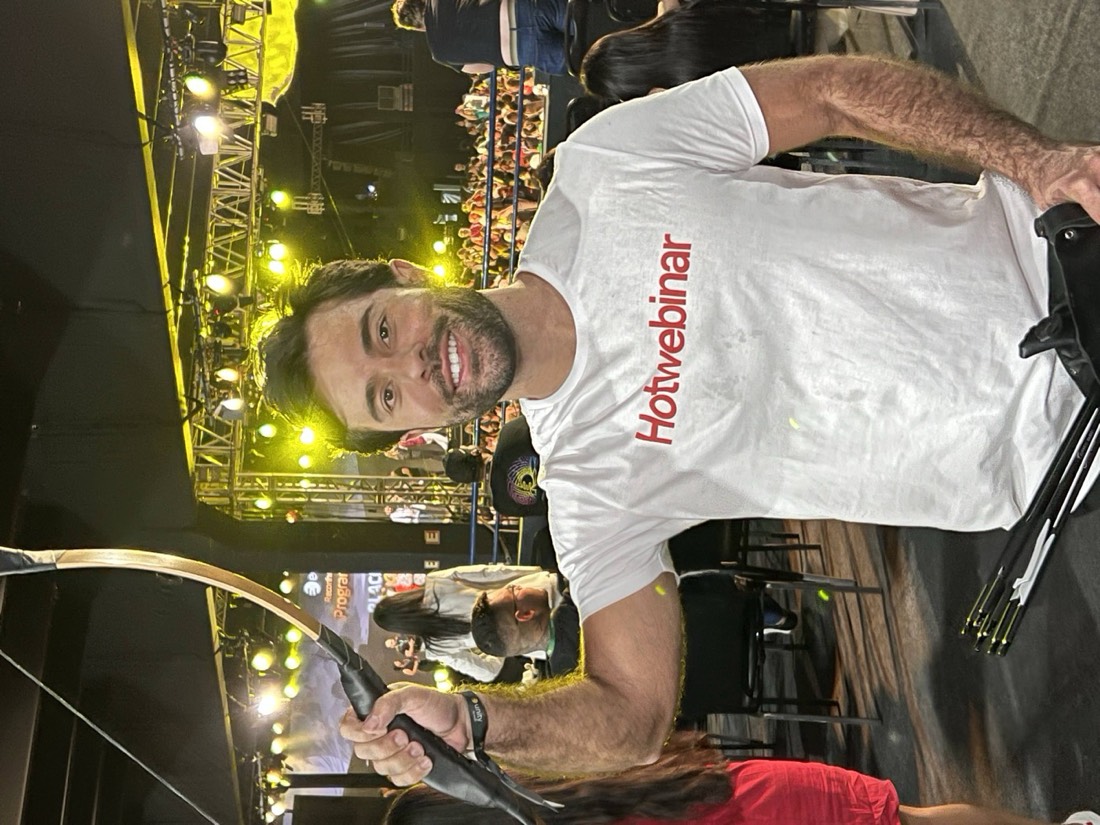
In Bryan Blandy's operations, the platform used is Hotwebinar. The presentation goes live at the scheduled time, and viewer behavior becomes information that helps the sales team decide whom to talk to first. To compare criteria in more detail, see the guide to the recorded webinar platform.
Webinar metrics: attendance, retention and conversion
In the operations we track, these are the reference numbers:
- Attendance: close to 40% of registrants watch.
- Conversion of attendees: between 5% and 11%.
- Cold list: between 3% and 4%.
These numbers change with the offer, the audience and the warm-up. Retention, meaning how many people stay until the offer, has no single reference number, because it depends heavily on the length and pace of each presentation. That is why the most useful thing is to look at the whole sequence, not one isolated number.
In a real high-ticket case, the math looked like this: 95 registrants, 51 attendees, 30 stayed until the offer, 26 applied, 5 booked, 4 meetings happened and 2 became sales. That was R$ 53,500 in sales with R$ 15,000 in ad spend.
Look at what this case shows. The presentation did its job: 26 of the 30 people who stayed until the offer filled in the application. The big loss came afterwards, between the application and the booking. If the owner of this business had rewritten the script, they would have been changing exactly the stage that already worked. The guide to webinar conversion rate shows how to read each stage.
The most common webinar mistakes
Treating the webinar as a standalone event
A webinar that happens, ends and takes nobody to the team is just another live stream. The money you paid for each registrant disappears the next day.
Switching platforms after every bad result
The tool is rarely the cause. Switching platforms changes the screen and leaves untouched the stage that is losing people.
Leaving people who clicked on the offer without contact
A stalled application is acquisition money waiting for an answer. That is where many businesses lose most of what they already spent to generate the lead.
Running a single webinar and concluding the format does not work
A single event measures one day, one audience and one version of the offer. It does not tell you whether the format works. It tells you how that day went.
Looking only at revenue
Revenue tells you whether you won, but not at which stage you lost. Without reading the whole sequence, any fix is a guess.
Webinar, live stream and VSL: what is the difference
All three formats use video, but they play different roles in a sales operation:
| Format | How people watch | What you know about who watched | Best use |
|---|---|---|---|
| Webinar | With registration, at the scheduled time, with chat | Who registered, who watched, how far they stayed and who clicked on the offer | Selling and pre-selling a high ticket |
| Live stream | On Instagram or YouTube, for whoever is online | Little or nothing about each person | Relationship and reach with followers |
| VSL | On the sales page, at any time, with no chat | Who visited the page and who bought | Quick decisions and low ticket |
A live stream is great for keeping your audience close, but it does not tell your sales team who is ready to talk. A VSL handles quick-decision sales well, but it does not create the commitment of a scheduled time. If you are unsure between the two sales formats, the guide VSL or webinar compares them with practical criteria.
Do you already have a product that sells?
The Funil 500K shows how to build the whole sequence: entry product, a presentation that goes live at the scheduled time and the buyer's move up to your mentoring or consulting.
See the Funil 500KWhat changes once you understand what a webinar is
A webinar makes sense for experts, mentors, consultants and companies that already have a validated product, already sell and want to stop depending on a launch or a live session for every sales cycle. The methodology has already been validated in more than 35 niches. It is not for someone starting from zero, with no product and no sales: in that case, the first step is to validate the offer.
Once you understand that a webinar is a stage of the sales process, you stop switching platforms every time results drop. You learn which stage is losing sales, your closer receives leads who have already spent time with you, and your next decision stops being a guess and becomes a number.
Frequently asked questions about webinars
What does webinar mean?
Webinar combines web and seminar and means a seminar held over the internet. In practice, it is an online presentation with registration, a scheduled time, chat interaction and a next step at the end, such as a purchase or an application.
What is the difference between a webinar and a webinário?
There is no difference in format. Webinário is the Portuguese adaptation of the word webinar, and both names describe the same online presentation with registration and a scheduled time. In the market and in searches, webinar is the most widely used term.
How do you run a webinar?
The decisions come before the tool: whether the offer already sells, where the presentation ends (checkout or application), which belief it needs to change and what happens to people who registered and did not decide. A webinar that sells is a stage of the sales process, connected to the offer, the sales team and follow-up, not a standalone event.
What is the difference between a webinar and a live stream?
A live stream happens on a social network for whoever is online, with no registration, and tells you little about each person who watched. A webinar has registration, a scheduled time and a call to action, and shows who watched, how far they stayed and who clicked on the offer. That is why a webinar works better for selling and for preparing the lead before sales.
How much does a webinar convert?
In the operations we track, attendance sits close to 40% of registrants, the conversion of attendees is between 5% and 11%, and a cold list converts between 3% and 4%. These numbers vary with the offer, the audience and the warm-up.
What is the best webinar platform?
The best one is the one that supports your process: registration with WhatsApp, entry at the scheduled time, reminders, chat, a call to action and data on who watched. In Bryan Blandy's operations, the platform used is Hotwebinar, where the presentation goes live at the scheduled time.